
What’s happening in Maheskhali?
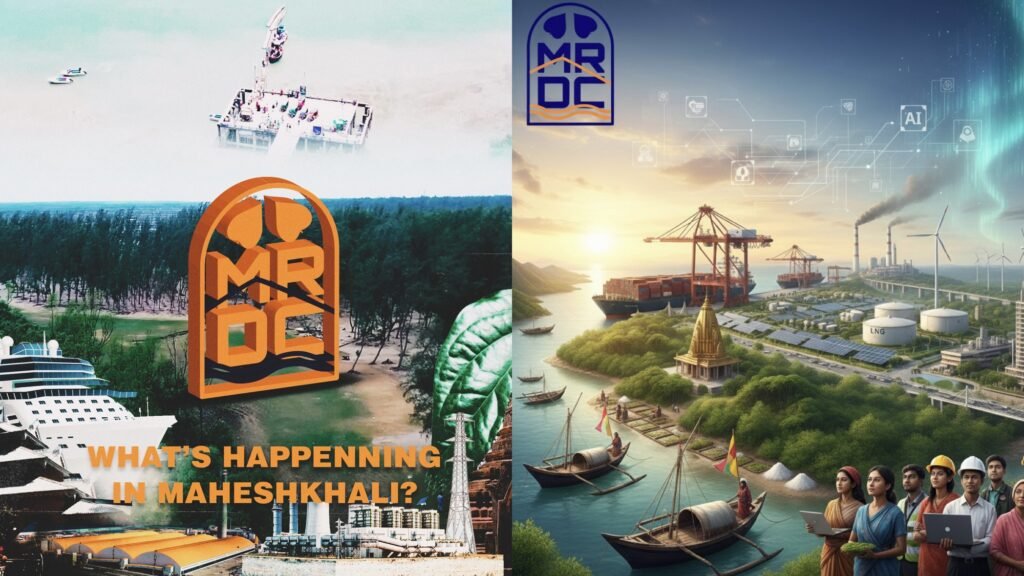
Maheshkhali, Bangladesh – Once a serene, hilly island in the Bay of Bengal, known for its salt pans, betel leaf cultivation, and the ancient Adinath Temple, Maheshkhali is now the epicenter of a colossal transformation. This remote island is rapidly emerging as the energy capital of Bangladesh, poised to host a deep-sea port and a futuristic township, drawing comparisons to the economic dynamism of Singapore. But amidst this whirlwind of development, a crucial question arises: how will this metamorphosis impact its people, culture, and fragile ecosystem?
Located in the Cox’s Bazar district, Maheshkhali Upazila covers an area of approximately 362.18 square kilometers. According to the 2022 census, it is home to 385,510 people, a diverse community of Muslims, Hindus, and Buddhists. A mix of Bengali and Rakhine communities who have lived here for generations, balancing livelihoods between land and sea. The island’s unique culture is a blend of these religious traditions and a lifestyle deeply intertwined with the sea and the land. For generations, the inhabitants have relied on fishing, salt farming, and agriculture for their livelihoods.
This traditional way of life is now set against a backdrop of mega-projects that are reshaping the island’s landscape and its future. The government of Bangladesh has designated Maheshkhali as a pivotal hub for the nation’s energy security and economic growth. At the heart of this development are several key initiatives:
The Energy Hub of Bangladesh: Maheshkhali is being developed into a massive energy hub. This includes the construction of Liquefied Natural Gas (LNG) terminals to meet the country’s growing energy demands, numerous power plants, including coal-fired and renewable energy projects, and an extensive network of pipelines and storage facilities. This concentration of energy infrastructure is intended to make Bangladesh self-reliant in the power sector and fuel its industrial ambitions.
The Matarbari Deep-Sea Port: A game-changer for Bangladesh’s maritime trade, the Matarbari deep-sea port is under construction in Maheshkhali. This will be the country’s first deep-sea port, capable of accommodating large mother vessels. The port is expected to significantly reduce shipping times and costs, boosting imports and exports and enhancing Bangladesh’s connectivity with the global market. Its strategic location is also expected to benefit neighboring landlocked countries.
A New Township Inspired by Singapore: The vision for Maheshkhali extends beyond industrial and energy projects. There are ambitious plans to develop a modern township, with some officials drawing parallels to the planned urban development of Singapore. This new urban center is envisioned to have state-of-the-art infrastructure, commercial zones, and residential areas, transforming the island into a bustling economic and logistical hub.
These monumental developments present a plethora of opportunities for Bangladesh. They promise to attract significant foreign investment, create thousands of jobs, and accelerate the nation’s economic growth. The energy hub will address a critical need for power, while the deep-sea port will unlock new avenues for trade and commerce. The proposed township could set a new standard for urban living in the country.
Why the Maheshkhali Research and Development Center (MRDC) Matters
Amidst this rapid and transformative development, the role of an organization like the Maheshkhali Research and Development Center (MRDC) becomes paramount. The sheer scale and pace of change in Maheshkhali bring with them a host of challenges that need careful and informed navigation. This is where MRDC’s vision to transform Maheshkhali into a knowledge-driven hub for sustainable development is critically important.
Bridging the Knowledge Gap: The mega-projects in Maheshkhali involve complex technical, environmental, and social dimensions. MRDC, with its focus on providing policy research and technical insights, can act as an independent and credible source of information and analysis for policymakers, investors, and the local community. By conducting research on energy security, renewable integration, and infrastructure safety, MRDC can help ensure that these projects are not only economically viable but also technically sound and resilient.
Championing Environmental Sustainability: The immense industrialization of a coastal island like Maheshkhali poses significant environmental risks. The preservation of its mangrove forests, coastal ecosystems, and marine biodiversity is crucial for the long-term well-being of the island and its people. MRDC’s focus on environmental and climate studies will be vital in monitoring the environmental impact of the projects, developing pollution control measures, and promoting climate-resilient development.
Ensuring Socio-Economic Inclusivity: A common concern with large-scale development projects is that the benefits often do not trickle down to the local population. MRDC’s mission to train local talent, assess the impact of projects on livelihoods, and promote women’s empowerment is essential to ensure that the people of Maheshkhali are active participants in and beneficiaries of this transformation. By fostering partnerships between the government, industry, and the local community, MRDC can help in creating a more equitable and inclusive development model.
Fostering Innovation and a Sustainable Future: The vision for Maheshkhali as an “innovation island” is where MRDC can play a transformative role. By establishing simulation labs, promoting digital monitoring systems, and incubating green-tech startups, the center can help steer the island’s development towards a more sustainable and technologically advanced future.
What is happening in Maheshkhali is nothing short of a paradigm shift. The island is at the forefront of Bangladesh’s journey towards becoming a developed nation. However, the success of this monumental endeavor will not just be measured in megawatts of power generated or containers shipped, but in the well-being of its people, the health of its environment, and the sustainability of its growth. The Maheshkhali Research and Development Center, with its comprehensive and forward-looking vision, is poised to be a crucial catalyst in ensuring that the transformation of Maheshkhali is not just about development, but about responsible and enlightened progress.
Moin Uddin Helaly Thouhid
Research Fellow
China University of Petroleum Beijing
MRDC Research Team